Green-Chili É Salt
Muối é
The highlands' answer to muối ớt — coarse salt pounded with green chili and fragrant é-basil leaf, the dipping salt built to sit beside grilled chicken.
By Vietnamese Cookbook Kitchen · May 19, 2026
The Central HighlandsĐổi Mới era, 1986–2008
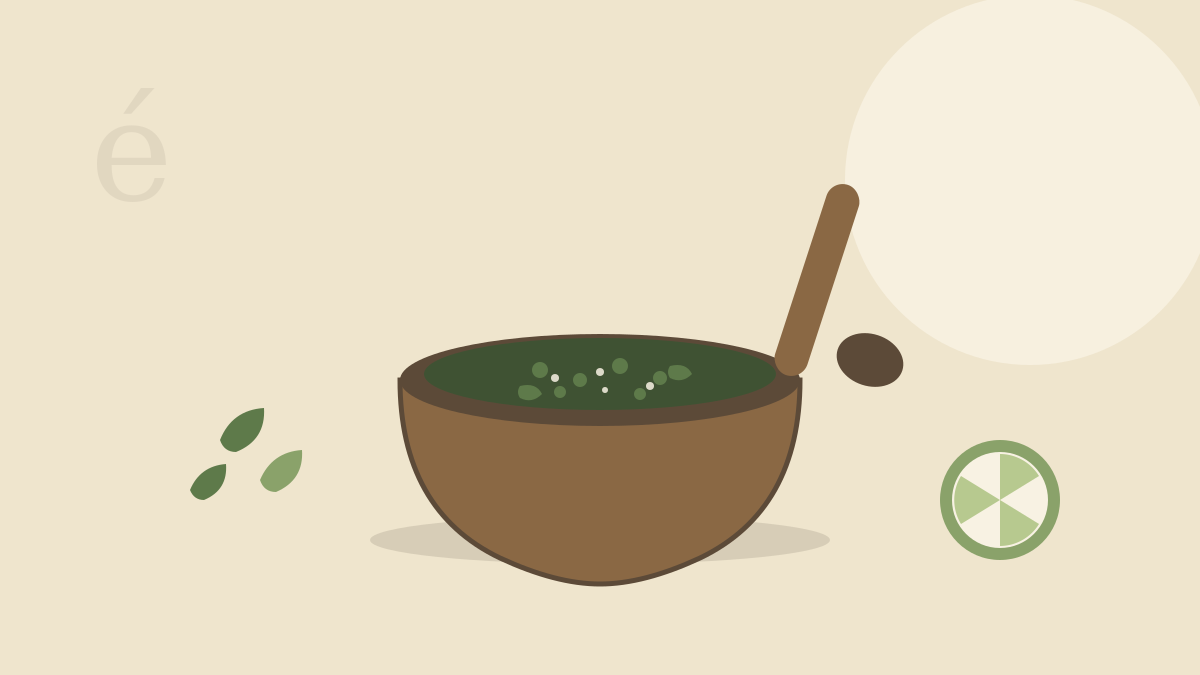 Gốc
Gốc- Prep
- 15 min
- Cook
- No cook
- Serves
- 6
- Level
- Beginner
Every region of Việt Nam has its own dipping salt, and the highlands' entry is muối é — built, like so much of Đà Lạt and Buôn Ma Thuột's cooking, around a leaf that barely exists outside this specific stretch of mountains. É basil doesn't travel well and doesn't dry into anything useful, so muối é has stayed a fundamentally local condiment even as other Vietnamese dipping salts have gone national. It emerged as a household staple in the đổi mới years, when the highlands' opening economy made both the leaf and the salt to pound it in more available to more kitchens.
The method matters as much as the ingredients: a mortar bruises where a knife only cuts, and bruising is what releases é's specific peppery, citrus-adjacent oil into the salt instead of leaving it sitting inert on top. Five minutes of pounding gets you a condiment that tastes nothing like ordinary salt and pepper — coarse, green, sharp enough to wake up a plain piece of grilled meat. Keep a jar of it next to the grill and it becomes the reason people ask for seconds.
Pound, don't chop. A knife bruises the é leaf into something wilted and grey; the mortar crushes its oils straight into the salt, which is the entire point of making this instead of buying plain salt and pepper.
Lời đầu bếp · A word from the kitchen
Ingredientsnguyên liệu
Serves 6
- 3 tbspcoarse sea salt — a flaky or coarse salt holds up to pounding better than fine table salt, which turns to paste too fast
- 2–3green bird's-eye chilies — adjust to taste; green chilies here read grassier and less sharp than red
- 15 glá é (é basil) leaves — about 1/3 cup packed — see the nước lẩu gà lá é entry for sourcing and a lemon basil substitute if you can't find it
- 2garlic cloves
- 1 tspsugar — rounds the salt and chili without making it sweet
- 1lime, halved — for squeezing at the table, not pounded in
Methodcách làm
Step 1: Pound the aromatics first
In a mortar, pound the garlic and chilies together until they break down into a rough, fragrant paste. Doing this before the salt goes in keeps the pestle from just pushing whole chili pieces around.
Step 2: Add the é and bruise it in
Add the é leaves and pound just until they darken and release their oil, a matter of seconds, not minutes. Overworking the leaves turns them bitter and grey instead of green and fragrant.
Step 3: Work in the salt and sugar
Add the coarse salt and sugar and pound everything together until you have a coarse, damp, deep-green mixture — texture matters here, you want visible grit, not a smooth paste.
Step 4: Rest briefly
Let it sit 5 minutes before serving so the salt draws out the last of the chili and é oils. It keeps, covered, in the fridge for about a week, though it's at its most fragrant the day it's made.
Step 5: Serve with lime at the table
Spoon into a small dish and set lime halves alongside so each diner squeezes their own juice in just before dipping. Squeezing it in ahead of time turns the salt soggy well before the meal is over.
Đồ nghề · The tools
Equipment
Portable gas burner
Bếp ga miniLẩu is not lẩu if someone has to keep walking to the stove. The tabletop butane burner turns a pot of broth into a two-hour dinner party.
Shop on Amazon →Mortar & pestle
Cối chàyLemongrass, garlic, and chilies pounded release oils a blender never finds — it bruises where blades slice. The sound of a Vietnamese kitchen starting dinner.
Shop on Amazon →Fine sieve / muslin
Rây lọcFor straining broth crystal-clear, squeezing coconut milk, and working tamarind pulp through into pure sour. Line it with muslin when the recipe says “clear” and means it.
Shop on Amazon →
Equipment links are Amazon affiliate links. As an Amazon Associate we earn from qualifying purchases, at no cost to you. Disclosure.
Questions from the kitchen
What does this pair with?
It's the dipping salt built specifically for the highlands' grilled chicken — try it alongside gà nướng sả, where the char and lemongrass of the chicken meet muối é's green, peppery bite. It's just as good with grilled or steamed seafood.
Is this the same as muối ớt from elsewhere in Việt Nam?
Related but distinct — muối ớt chanh, the more widely known version, leans on red chili and lime zest for a bright, hot salt found across the south. Muối é swaps in é basil for a grassier, more herbal profile that's specific to the highlands, where the leaf actually grows.
Can I make this in a food processor instead of a mortar?
You can pulse it, but the texture and aroma won't match — a mortar crushes cell walls and releases oils in a way blades mostly shear past. If you must use a processor, pulse in short bursts and stop the moment it looks coarsely combined, well before it turns smooth.
Nấu tiếp · Cook next
Keep the burner on
 Gốc
GốcFoundations·20 min·Beginner
Caramel SauceNước màu
Vietnamese caramel sauce — sugar taken past amber to bitter mahogany, the color and backbone of every kho. Stages by shade and smell, jarred for months.
 Gốc
GốcFoundations·95 min·Beginner
Bamboo-Tube RiceCơm lam
Highland sticky rice roasted in bamboo tubes — plus an oven method with foil and banana leaf — served with muối vừng lạc, sesame-peanut salt.
 Gốc
GốcFoundations·25 min·Beginner
Pickled Carrot & DaikonĐồ chua
The sweet-sour carrot and daikon pickle that lives inside every bánh mì — a ratio-first quick pickle, with the salting step that guards the crunch for weeks.