Stir-Fried Water Spinach with Garlic
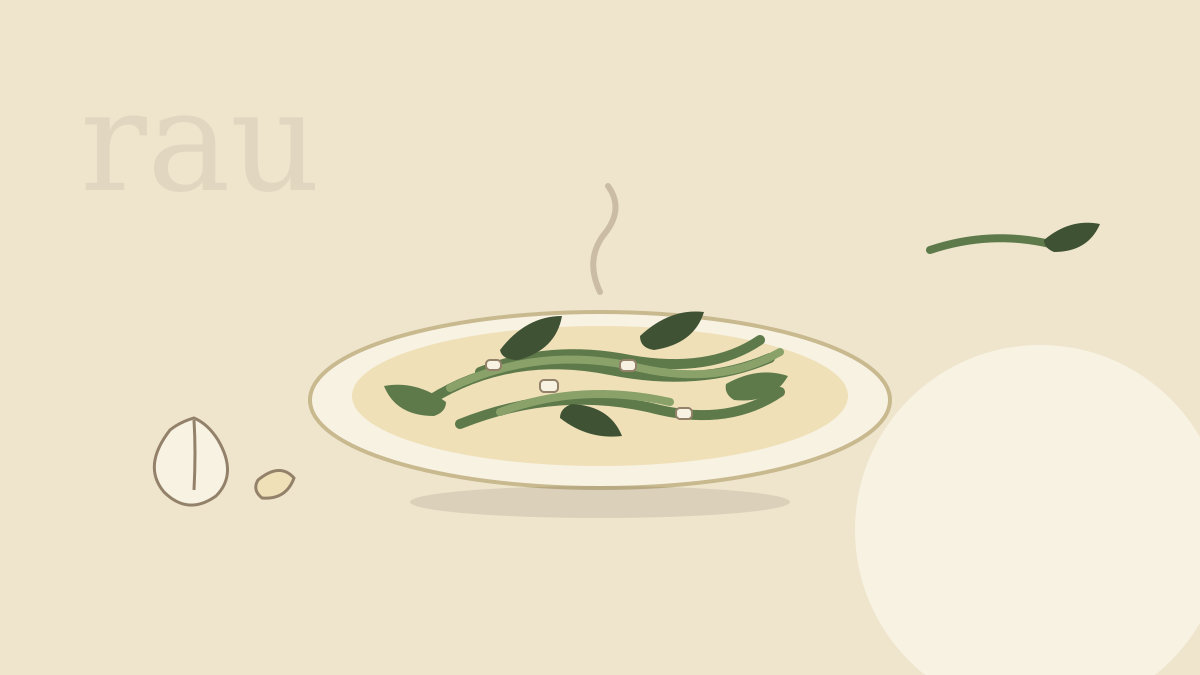
Rau muống xào tỏi
Water spinach flash-fried with a fistful of garlic — the every-table vegetable of northern Vietnam, and a wok-heat lesson you can taste in one bite.
By Vietnamese Cookbook Kitchen · April 16, 2026
Hà Nội & the Red River DeltaThe Subsidy Era era, 1975–1986
 Gốc
Gốc- Prep
- 15 min
- Cook
- 5 min
- Serves
- 4
- Level
- Beginner
Ask anyone who grew up in the north during the bao cấp years — the subsidy era of 1976 to 1986, when food moved by ration book and queue — what was actually on the table, and the answer is rau muống. Water spinach grew fast and free in every pond and paddy ditch, it cost next to nothing when there was next to nothing, and it fed Hanoi through the leanest decade in living memory. The northern saying "anh đi anh nhớ quê nhà, nhớ canh rau muống..." — away from home, it's the rau muống soup you miss — predates the hardship and outlasted it. The vegetable is not a memory of poverty; it is simply the every-table green, in lean years and fat ones.
As a cook, treat this dish as your wok-heat exam. The pan must be smoking before anything touches it, because rau muống is mostly water held in a crisp tube, and only violent heat sears it before it stews. Garlic in quantity, fish sauce, ninety seconds of noise, and out. Serve it beside rice and something braised, and notice that the humblest plate on the table is the first one emptied.
Wash the rau muống early and let it drain bone-dry in a colander. Water on the leaves is the enemy — it turns a stir-fry into a braise in about four seconds.
Lời đầu bếp · A word from the kitchen
Ingredientsnguyên liệu
Serves 4
- 500 gwater spinach (rau muống) — about 1 lb — sold as ong choy or kangkung in Chinese and Southeast Asian markets; look for firm, hollow stems and perky leaves
- 8garlic cloves — yes, eight — smashed flat and roughly chopped, not minced to paste
- 2 tbspneutral oil with a high smoke point
- 15 mlfish sauce — 1 tbsp
- 1/4 tspsugar
- As neededsqueeze of lime — optional, at the table — northern tables often skip it
Methodcách làm
Step 1: Break down the greens
Snap the rau muống into finger lengths, discarding the woody bottom third of the stems, and wash it in two changes of water. Keep stems and leaves in separate piles — the hollow stems need a head start the leaves don't.
Step 2: Get the pan genuinely hot
Set a wok or your widest skillet over the highest heat you have and wait until a drop of water skitters and vanishes. This is the step people skip, and it is the whole dish — a merely warm pan steams the greens grey instead of searing them green.
Step 3: Bloom the garlic
Add the oil, then the garlic, and stir for ten seconds — it should sizzle furiously and just begin to turn gold at the edges. Any darker and it will be bitter by the time the greens are done, so have the stems already in your hand.
Step 4: Stems, then leaves
Throw in the stems and toss hard for a minute, then the leaves, the fish sauce, and the sugar, and keep everything moving for one minute more. The greens should hiss the entire time — if the pan goes quiet, it has lost the heat and you should stop adding and start waiting.
Step 5: Out fast
The instant the leaves collapse and the stems are glossy but still snap, tip everything onto a plate. Rau muống keeps cooking in its own heat, and the gap between squeaky-crisp and army-issue is under a minute.
Đồ nghề · The tools
Equipment
Portable gas burner
Bếp ga miniLẩu is not lẩu if someone has to keep walking to the stove. The tabletop butane burner turns a pot of broth into a two-hour dinner party.
Shop on Amazon →Nonstick frying pan
Chảo chống dínhFor ốp la, fried rice, searing tofu, and toasting a bánh mì flat — the everyday pan between the grill and the fryer.
Shop on Amazon →Fine sieve / muslin
Rây lọcFor straining broth crystal-clear, squeezing coconut milk, and working tamarind pulp through into pure sour. Line it with muslin when the recipe says “clear” and means it.
Shop on Amazon →
Equipment links are Amazon affiliate links. As an Amazon Associate we earn from qualifying purchases, at no cost to you. Disclosure.
Questions from the kitchen
Can I use broccolini or regular spinach instead?
Broccolini is the better stand-in — cut it thin on the bias and give the stems an extra minute. Be clear about the trade: you gain sweetness and lose the hollow stem's squeak, which is half the point of rau muống, and you'll pay two or three times the price for the privilege. Regular spinach wilts to nothing here; skip it.
Why did mine come out dark and watery?
Wet greens, a crowded pan, or timid heat — usually all three at once. Dry the rau muống completely, cook in two batches if your burner is ordinary, and don't stir gently. This dish rewards a little violence.
Is water spinach really banned in some places?
In parts of the United States it's regulated as an invasive aquatic plant — some states restrict growing it, though buying it for the table is generally fine where Asian markets carry it. Check locally before planting; buy freely, cook the same day.
Nấu tiếp · Cook next
Keep the burner on
 Gốc
GốcFoundations·20 min·Beginner
Caramel SauceNước màu
Vietnamese caramel sauce — sugar taken past amber to bitter mahogany, the color and backbone of every kho. Stages by shade and smell, jarred for months.
 Gốc
GốcFoundations·95 min·Beginner
Bamboo-Tube RiceCơm lam
Highland sticky rice roasted in bamboo tubes — plus an oven method with foil and banana leaf — served with muối vừng lạc, sesame-peanut salt.
 Gốc
GốcFoundations·25 min·Beginner
Pickled Carrot & DaikonĐồ chua
The sweet-sour carrot and daikon pickle that lives inside every bánh mì — a ratio-first quick pickle, with the salting step that guards the crunch for weeks.