Huế Sour Shrimp
Tôm chua
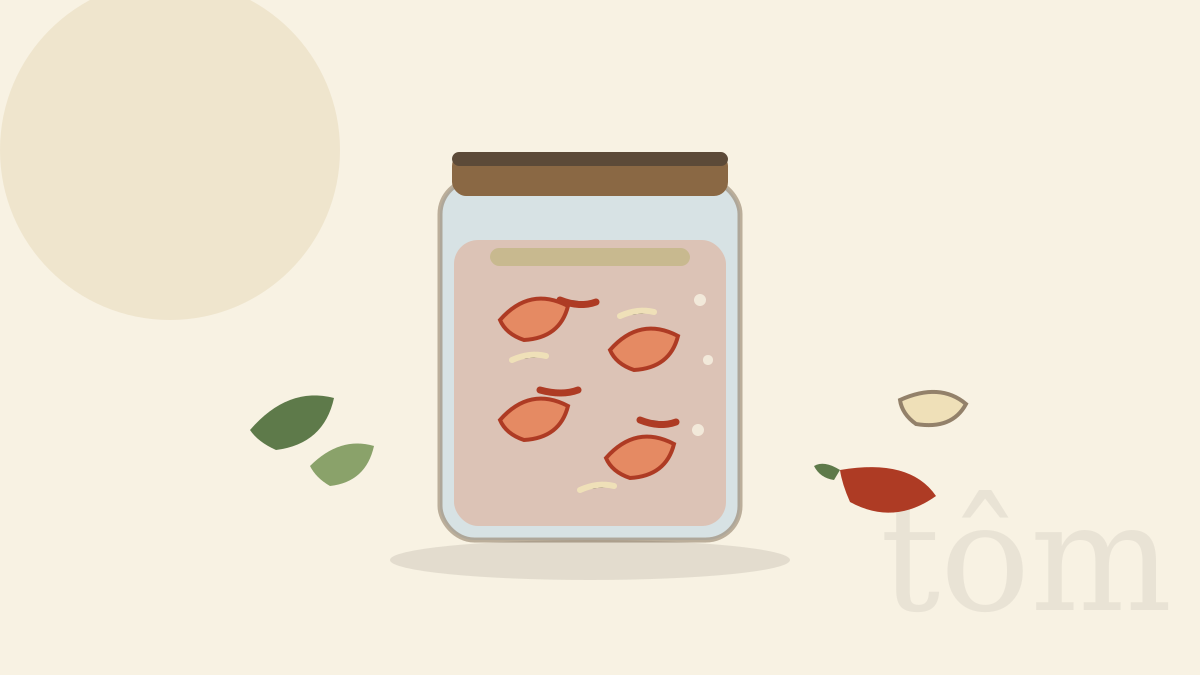
Huế's fermented sour shrimp — whole shrimp turned scarlet and bright in a rice, galangal, and chili cure. The condiment that runs the table, made safely at home.
By Vietnamese Cookbook Kitchen · May 16, 2026
Huế & the Imperial CourtNguyễn & the Huế Court era, 1802–1883
 Gốc
Gốc- Prep
- 30 min
- Cook
- 10 min
- Serves
- 12
- Level
- Intermediate
Huế likes to say tôm chua isn't from Huế at all. The story goes that the fermented sour shrimp of Gò Công, in the Mekong delta, traveled north in the nineteenth century with the household of Lady Từ Dụ — the Gò Công–born consort who became mother of Emperor Tự Đức — and that the court's kitchens refined it into the scarlet jar sold today in every market from Đông Ba outward. No document signs the legend, but the geography rings true, and Huế's habit of perfecting other people's ideas is extensively documented.
Technically, this is lacto-fermentation with the volume turned up: salt at a weighed 8 percent, glutinous rice as fuel, galangal and chili as the band. Weigh the salt and keep everything submerged — those two rules are the entire safety manual, and the difference between a living condiment and a science experiment. The reward for discipline is a jar that improves rice, pork, and your standing with anyone from central Vietnam.
Fermentation forgives many sins but not guesswork — weigh the salt. Eight percent of the shrimp's weight, on a scale, every time. "A good handful" is how heirloom recipes read and how bad jars happen.
Lời đầu bếp · A word from the kitchen
Ingredientsnguyên liệu
Serves 12
Shrimp
- 500 gvery fresh small shrimp, shell on — about 1 lb — finger-length or smaller, ideally alive or same-day off the boat; frozen-thawed is acceptable only if it smells of nothing but the sea
- 100 mlstrong rice wine or vodka — about 7 tbsp, for the antiseptic rinse
- 40 gfine salt — exactly 8 percent of the shrimp's weight — weigh it, don't scoop it
Cure
- 100 gcooked glutinous rice, cooled — about ½ cup — the starch that feeds the lactic fermentation and later thickens the sauce
- 40 ggalangal, in fine julienne — about a thumb — riềng, the signature; young ginger is the pale but passable understudy
- 6garlic cloves, thinly sliced
- 4red chilies, seeded and sliced in strips
- 2 tbspfish sauce
- 1 tbspsugar
Equipment
- 11-liter glass jar with lid, sterilized — boiled 10 minutes or fresh from a hot dishwasher, dried upside down on a clean towel
- 1small weight — a boiled flat stone, a zip-top bag of brine, or a fitted glass disc — anything clean that keeps the shrimp submerged
Methodcách làm
Step 1: Sterilize everything
Boil the jar, lid, and weight for 10 minutes and let them air-dry. You are about to keep raw shellfish at room temperature on purpose; the margin for casual hygiene is zero, and it starts here.
Step 2: Trim and rinse the shrimp
Snip off the whiskers, legs, and the sharp rostrum, keeping shells and tails on. Rinse the shrimp in the rice wine, tossing for a full minute, and drain well. The alcohol knocks down surface bacteria and leaves a faint warmth the finished jar keeps.
Step 3: Mix the cure
Toss the drained shrimp with the weighed salt, then with the glutinous rice, galangal, garlic, chili, fish sauce, and sugar until every shrimp is dressed. The rice will look like too much; in three days it will be a loose, silky sauce.
Step 4: Pack and submerge
Pack the mixture into the jar, pressing out air pockets, and set the weight on top so everything sits below the liquid the salt draws out within hours. Anything poking above the surface is where trouble starts — check after a day and press it back down with a clean spoon.
Step 5: Ferment in the warm
Close the lid loosely and leave the jar at 22–28°C (72–82°F), out of direct sun, for 3 to 5 days — nearer 3 in a warm kitchen. It is ready when the shrimp have turned rose-red, the rice has slackened to sauce, and the smell is sour-sweet and appetizing rather than merely loud.
Step 6: Refrigerate and serve
Move the jar to the fridge, where the ferment slows to a crawl; it is at its best from week one to week six. Serve the classic way — with boiled pork belly, slices of vả or green banana, herbs, and rice — or stir a spoonful anywhere fish sauce feels too polite.
Đồ nghề · The tools
Equipment
Mandoline
Bàn bàoĐồ chua lives or dies on evenness — carrot and daikon cut to the same whisper-thin matchstick pickle at the same speed. Use the guard; every Vietnamese grandmother has the scar that says otherwise.
Shop on Amazon →Fine sieve / muslin
Rây lọcFor straining broth crystal-clear, squeezing coconut milk, and working tamarind pulp through into pure sour. Line it with muslin when the recipe says “clear” and means it.
Shop on Amazon →
Equipment links are Amazon affiliate links. As an Amazon Associate we earn from qualifying purchases, at no cost to you. Disclosure.
Questions from the kitchen
How do I know it's safe — and when it isn't?
Safe looks like rose-red shrimp under liquid, a clean sour-sweet smell, and gentle bubbles in the first days. Discard the jar — without tasting — for any of the following: shrimp gone grey-black, fuzzy mold above the liquid, a putrid or ammonia smell, or shrimp that were left poking above the brine for a day. As with any raw ferment, pregnant and immunocompromised eaters should pass.
Why did my shrimp darken instead of turning red?
Either the shrimp weren't fresh enough (the head blackens first — it's enzymatic, and starts before fermentation can outrun it) or they spent time exposed to air. Start with truly fresh shrimp, keep the weight on, and the astaxanthin in the shells will do the reddening on schedule.
What do I actually eat it with?
The canonical plate is thịt luộc tôm chua — boiled pork belly sliced thin, a shrimp or two per bite, vả or green banana for astringency, herbs, and rice or rice paper to bundle it. Beyond that, treat it like Huế's answer to kimchi juice: a spoonful wakes up fried rice, noodle salads, and any dipping sauce feeling flat.
Nấu tiếp · Cook next
Keep the burner on
 Gốc
GốcFoundations·20 min·Beginner
Caramel SauceNước màu
Vietnamese caramel sauce — sugar taken past amber to bitter mahogany, the color and backbone of every kho. Stages by shade and smell, jarred for months.
 Gốc
GốcFoundations·95 min·Beginner
Bamboo-Tube RiceCơm lam
Highland sticky rice roasted in bamboo tubes — plus an oven method with foil and banana leaf — served with muối vừng lạc, sesame-peanut salt.
 Gốc
GốcFoundations·25 min·Beginner
Pickled Carrot & DaikonĐồ chua
The sweet-sour carrot and daikon pickle that lives inside every bánh mì — a ratio-first quick pickle, with the salting step that guards the crunch for weeks.